
We Offer a Range of Services & Products to Meet Your Needs
Neuromuscular AFOs
Ankle-Foot Orthoses for Neuromuscular Conditions
AFOs (Ankle-Foot Orthoses) play an important role in rehabilitation and long-term mobility for people with neuromuscular conditions. They may be indicated for patients experiencing mild to severe muscle weakness, particularly in the lower leg and below the knee.
Common neurological conditions that may benefit from orthotic intervention include:
-
Spinal cord injury and paraplegia
-
Stroke
-
Multiple sclerosis (MS)
-
Cerebral palsy (CP)
-
Post-polio syndrome
-
Charcot-Marie-Tooth disease (CMT)
Every orthotic solution is individually designed around the patient’s needs, with safety, stability and functional movement as key priorities.
Custom orthoses can provide targeted support and stance-control features to assist with:
-
Improved lower-limb stability
-
Safer standing and walking
-
Better control of ankle and foot position
-
Support for weakened muscles
-
Maintaining functional range of motion
-
Improved confidence during everyday mobility


Neuromuscular KAFOs
A KAFO (Knee-Ankle-Foot Orthosis) is designed to support people with significant lower-limb weakness or paralysis by compensating for functional limitations associated with their individual condition.
KAFOs may be particularly beneficial when there is weakness or paralysis affecting the knee or hip extensors, which can significantly impact standing stability and safe walking.
Discover the technology
In recent years, advances in material technology and continued innovation have led to significant developments in orthotic appliances. The FIOR & GENTZ joint system has established itself as a leading and highly innovative joint system in the market.
For the first time, through intelligent design and engineering, it is possible to compensate for the loss of muscle control and strength. With a range of options designed to accommodate varying degrees of instability, the joint and fabrication system can significantly improve patient outcomes and provide a new level of independence that was previously unattainable.


Ankle and Foot Orthoses
There are a range of orthotic devices commonly used to manage orthopaedic foot and ankle conditions, including:
-
Posterior shell solid-ankle AFOs – custom made
-
Ground Reaction AFOs – custom made
-
Arizona Braces – custom made
-
Short articulated AFOs – custom made
-
CAM/ROM walkers
These devices may be prescribed for conditions such as ankle arthritis, tibialis posterior tendon dysfunction and Achilles rupture.
Choosing the appropriate device requires careful clinical assessment and, for custom orthoses, usually an impression or cast of the limb.
Appropriate footwear is also an important consideration to ensure the orthosis provides optimal comfort, stability and function.
For some patients, orthotic management can provide an effective alternative to surgical intervention.
Footwear Modifications
Modifications to a patients footwear can often provide a significant improvement to comfort and function. Not all shoes are made the same, some flex more, some are more cushioning and general shoe shapes vary significantly.
Modifications can be considered as customising a shoe to provide the shoe with the physical attributes to assist in delivering the treatment principles.
Modifications include:
-
Carbon Fibre stiffening to the sole of a shoe
-
Creation of a rocker sole
-
Heel raises
-
Wedges, flares and bolsters
-
Sole widening
-
Balloon patches
-
Addition of velcro closures.
Collaborative Approach

Collaborative Approach
The best patient outcomes are often achieved through a collaborative approach, particularly when managing complex conditions.
As a patient’s needs become more complex, treatment may involve a range of healthcare professionals, with each specialist bringing their own knowledge and perspective to the overall management plan.
By working together, each discipline can contribute its expertise to help patients achieve the best possible functional outcome.
Physiotherapists often play an important role alongside orthotic management. They can assist with strengthening the muscles supported by the orthosis, maintaining joint mobility and addressing the effects of pain, weakness or reduced function around the affected joint.
This collaborative approach helps ensure that orthotic treatment and rehabilitation work together, supporting the patient’s mobility, independence and long-term function.
Diabetic and Charcot Neuropathy
Diabetic foot management is a specialised area of orthotic care requiring careful design, precise pressure management and ongoing clinical monitoring.
Successful management focuses on reducing the risk of injury by carefully considering plantar pressures, foot alignment, immobilisation and shear forces.
Orthotic solutions may include:
-
Custom-made EVA insoles designed to redistribute and reduce pressure
-
Accommodative footwear to provide additional protection and space
-
Footwear modifications, such as carbon-fibre stiffening and shoe widening, to improve stability and reduce pressure. Preference is given to modifying off the shelf shoes, rather than prescription of full custom made footwear.
Education and regular follow-up are also essential components of effective diabetic foot care. Ongoing monitoring helps ensure that the orthotic solution continues to provide appropriate protection, comfort and function over time.

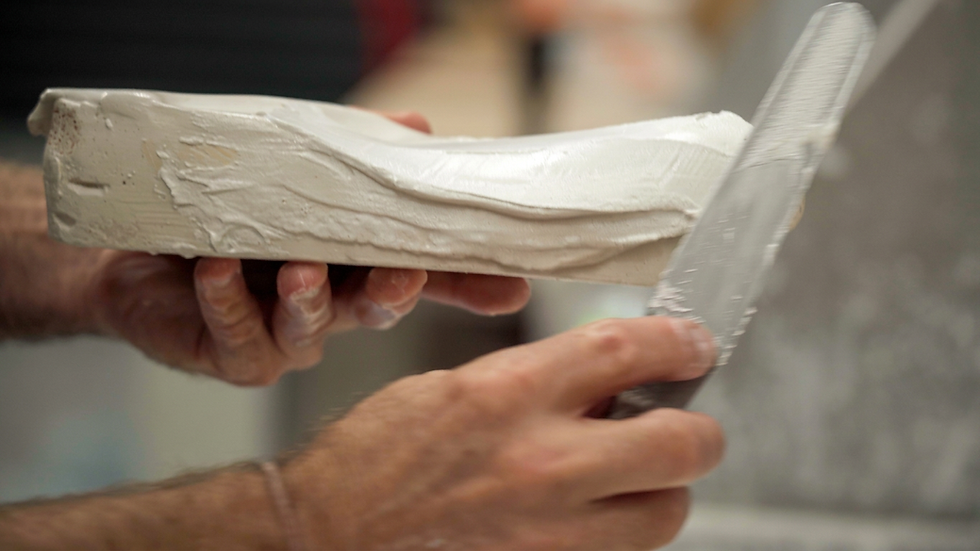

Custom Foot orthoses
Diabetic foot management is a specialised area of orthotic care requiring careful design, precise pressure management and ongoing clinical monitoring.
Successful management focuses on reducing the risk of injury by carefully considering plantar pressures, foot alignment, immobilisation and shear forces.
Orthotic solutions may include:
-
Custom-made EVA insoles designed to redistribute and reduce pressure
-
Accommodative footwear to provide additional protection and space
-
Footwear modifications, such as carbon-fibre stiffening and shoe widening, to improve stability and reduce pressure. Preference is given to modifying off the shelf shoes, rather than prescription of full custom made footwear.